



Oilfield Toolbox Talk Topics
What Every Oilfield Worker and Safety Pro Needs to Know
If you work in oil and gas — or you’re running safety for a crew that does — you already know the stakes. The hazards are real, they change fast, and a five-minute talk before a shift can be the difference between everyone going home safe or not. This guide is built for supervisors, safety managers, and anyone responsible for keeping oilfield workers informed and protected.
We’ll walk you through why oilfield toolbox talk topics matter more than most people give them credit for, how the hierarchy of safeguards in oil and gas shapes the way you should approach safety meetings, and where to find free oilfield toolbox talk resources you can actually put to use today.
No fluff — just the stuff that helps you run a tighter, safer oilfield safety program.
Understanding the Importance of Safety in the Oilfield
Common Hazards Workers Face in the Oil and Gas Industry
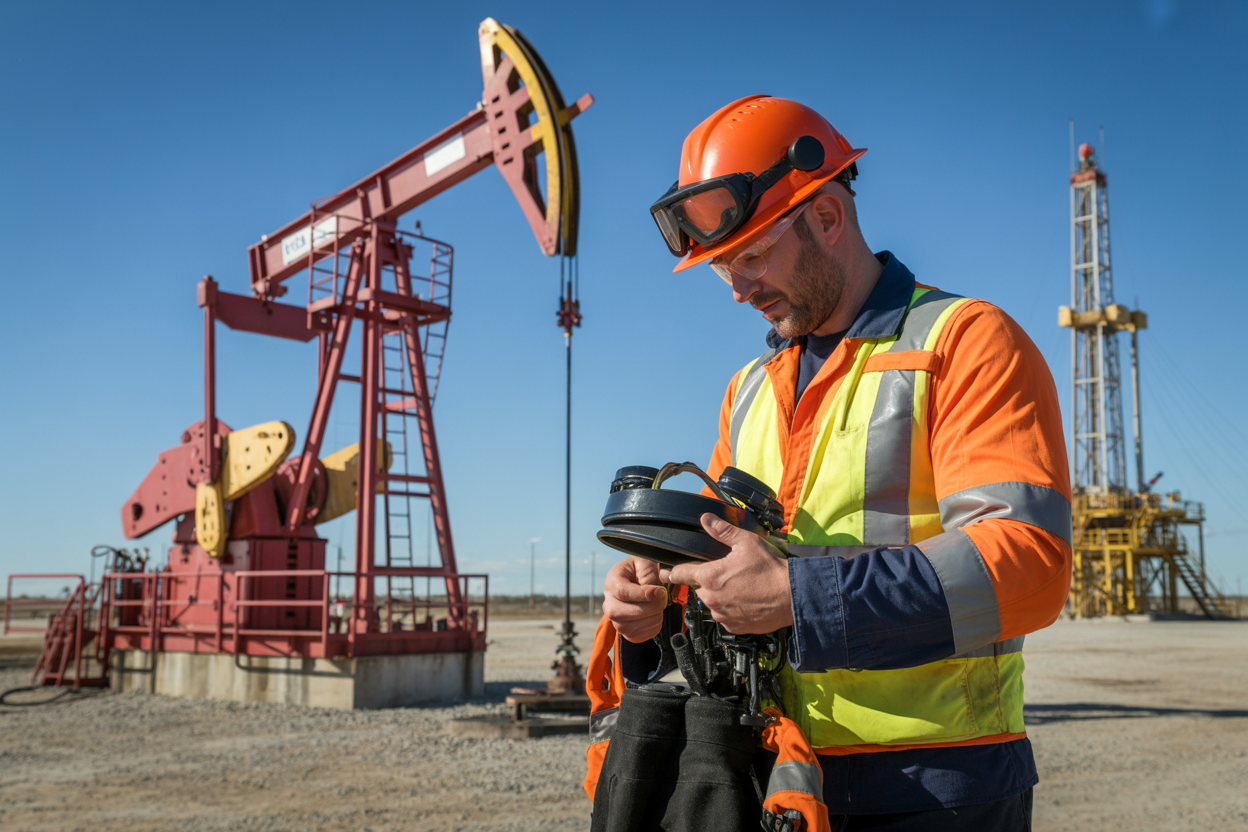
Oilfield workers encounter some of the most dangerous conditions in any U.S. industry. Key hazards include:
- Machinery contact — the leading injury source, accounting for 30.1% of severe injuries
- Slips, trips, and falls — responsible for 17.6% of severe incidents
- Vehicle incidents — involved in 7.5% of severe injuries
- Exposure to hazardous chemicals, extreme heat, and flammable hydrocarbons
Upper extremities bear the brunt of these dangers, with 42.6% of all severe injuries affecting hands and arms.
Consequences of Ignoring Safety Protocols
The numbers tell a sobering story. Between January 2015 and July 2022, OSHA recorded 2,101 severe injuries in the oil and gas extraction sector alone — including amputations, eye loss, and hospitalizations. Over a recent 20-year span, upstream operations logged a fatality rate five to eight times greater than the national average. In 2008–2017, 376 workers died in incidents preventable by following established life-saving rules.
Why Ongoing Safety Training Is Essential
Contract workers — particularly in well-servicing — face disproportionately higher injury rates, largely due to inconsistent training and limited hazard awareness. Incorporating regular oilfield safety meeting topics through structured toolbox talks directly addresses this gap, building a stronger safety culture across all crew levels.
The Hierarchy of Safeguards in Oil and Gas Safety

A. Elimination and Substitution as the Most Effective Controls
In any oilfield safety program, the hierarchy of safeguards prioritizes removing hazards entirely before applying lesser controls.
- Elimination — Completely eradicates the hazard by redesigning work tasks to avoid high-risk activities altogether
- Substitution — Replaces the hazard source with a lower-risk alternative, reducing overall exposure without full elimination
These two controls sit at the top because they address the root cause rather than managing symptoms of the hazard.
B. Engineering and Administrative Controls
With elimination and substitution addressed, the next tier applies when hazards cannot be fully removed.
- Engineering controls — Physical modifications (e.g., machine guards, barriers) that reduce worker exposure to the hazard
- Administrative controls — Procedural safeguards including training programs, safe operating procedures (SOPs), and hazard warning labels
For oil and gas toolbox talks, administrative controls are especially relevant, as safety meetings directly reinforce these procedures on the job site.
C. The Role of PPE as a Last Line of Defense
PPE occupies the lowest position in the hierarchy of safeguards in oil and gas — used only when higher-order controls have been considered and ruled out. While hard hats, gloves, and hearing protection reduce injury severity, they do not eliminate the hazard itself, making them a supplement, never a substitute, for stronger controls.
Benefits of Holding Regular Toolbox Talks in the Oilfield
Keeping Workers Up to Date on Changing Operations
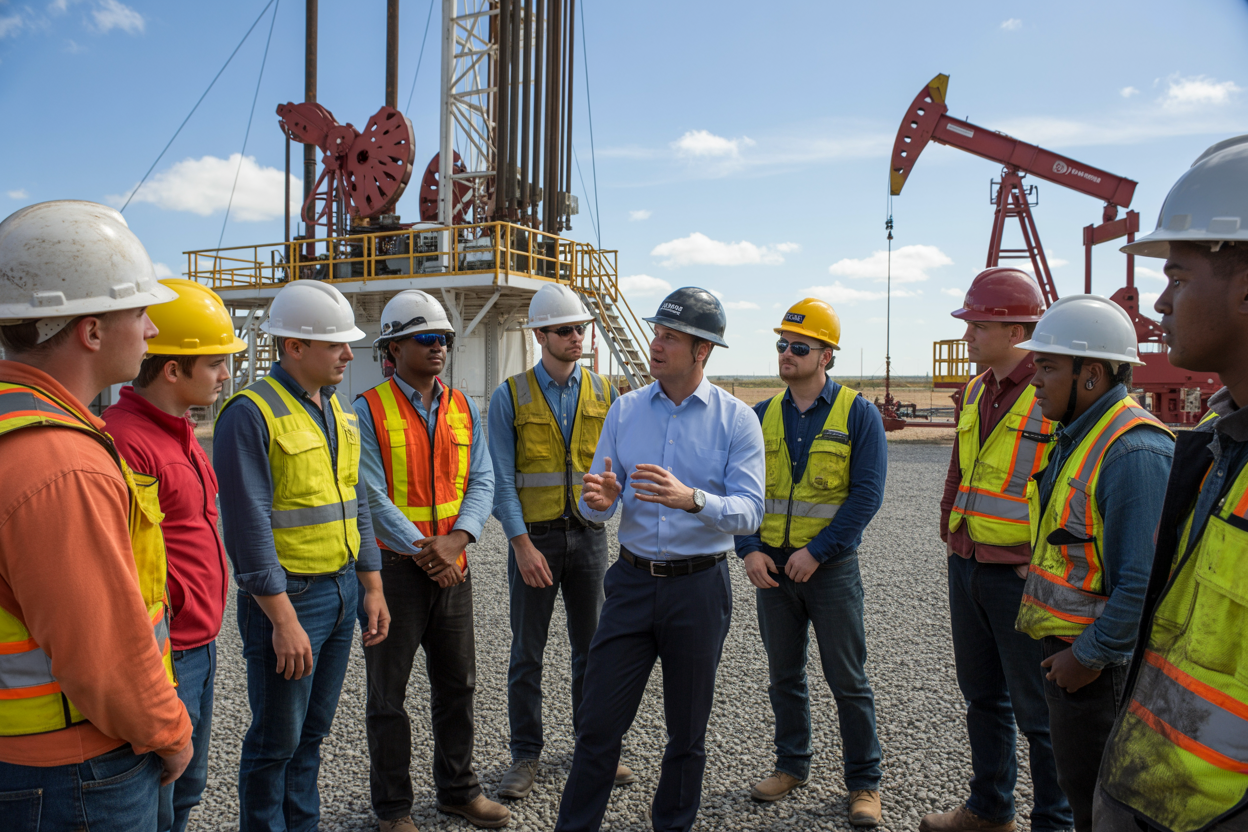
Oilfield operations are dynamic — equipment changes, new crews rotate in, and site-specific hazards evolve constantly. Regular oil and gas safety toolbox talks ensure workers stay informed about current conditions, updated procedures, and site-specific risks before they begin each shift.
Preventing Complacency Among Experienced Workers
Familiarity breeds complacency, and in the oilfield, complacency kills. Seasoned workers may unconsciously skip steps or underestimate hazards like high-pressure lines, confined spaces, or rotating equipment. Consistent oilfield safety meeting topics serve as critical reminders, reinforcing the same fundamentals that prevent the most common fatalities — including struck-by, caught-in, and caught-between incidents, which account for three out of every five on-site deaths in oil and gas.
Key reminders for experienced workers include:
- Proper lockout/tagout procedures
- Fall protection equipment inspection
- Atmospheric testing before confined space entry
- Machine guarding verification
Demonstrating a Company’s Commitment to Safety
Holding regular oilfield toolbox talks signals to every worker that safety is a core organizational value — not an afterthought. When supervisors consistently lead structured safety conversations, it actively strengthens site safety culture, builds trust among crews, and reinforces that incident prevention is everyone’s shared responsibility.
How to Access Free Oilfield Toolbox Talk Resources
Downloading and Printing Free OSHA Safety Talks
Free oilfield toolbox talk resources are readily available through OSHA’s training platform. These talks can be downloaded and printed at no cost for use within your company or organization — making them an accessible option for any oilfield safety program.
Using Sign-In Sheets to Document Safety Meetings
Every free OSHA toolbox talk comes with a sign-in sheet, allowing supervisors to:
- Document attendance at each safety meeting
- Keep records on file to demonstrate an ongoing commitment to workplace safety
- Distribute employee handouts included with many talks
This documentation is essential for maintaining compliance and supporting your oilfield safety program during audits or inspections.
Finding Oil and Gas Specific Safety Talks Online
Now that we’ve covered OSHA’s free resources, platforms like Safety Talk Ideas offer additional oil and gas toolbox talk ideas, including:
- A large topic database for daily safety huddles
- PDF versions of talks — one page, simple, and easy to read
- Speaking notes that make oilfield safety meeting topics more organized and engaging
Employers, insurance companies, safety associations, and unions are encouraged to link to these free oilfield toolbox talk resources, provided the content is not altered or sold.
Key Oilfield Toolbox Talk Topics to Cover

High-Pressure Zone Safety and Pressurized System Hazards
Critical oilfield toolbox talk topics in this category include:
- Pressure vessel safety and blowout prevention
- Erosion, leaks, and line bursts
- Whip crack installation
- Hose parting during pneumatic testing
- Inspecting pressure safety valves
Chemical Hazards Including Silica Exposure and Vessel Degassing
Chemical risks demand dedicated oilfield safety meeting topics, particularly:
- Silica exposure from hydraulic fracturing sand
- Chemical hazards of vessel degassing
- Chemical neutralization procedures
- Safe chemical transfer to portable containers
Equipment Safety Including Cranes, Pumps, and Frac Piping
With this in mind, equipment-related toolbox talk topics for oilfield workers should address:
- Safe staging of mobile cranes and outrigger deployment
- Centrifugal pump maintenance
- Breaking down frac piping hazards
- Four hazards of tripping pipe
- Pipeline installation risks
Spill Prevention and Environmental Safety Practices
Now that we’ve covered equipment, spill prevention rounds out your oilfield safety best practices by addressing:
- Spill prevention protocols
- Tank cleaning procedures
- Proper berm installation
- Staging holding tanks safely
Personal Protective Equipment Care and Maintenance
PPE topics complete a well-rounded oilfield safety program:
- Respirator care and maintenance
- Fall protection harness inspection
- Proper anchoring of lanyards
Maximizing Your Safety Program with Premium Resources
Access to Hundreds of Exclusive Oil and Gas Safety Talks
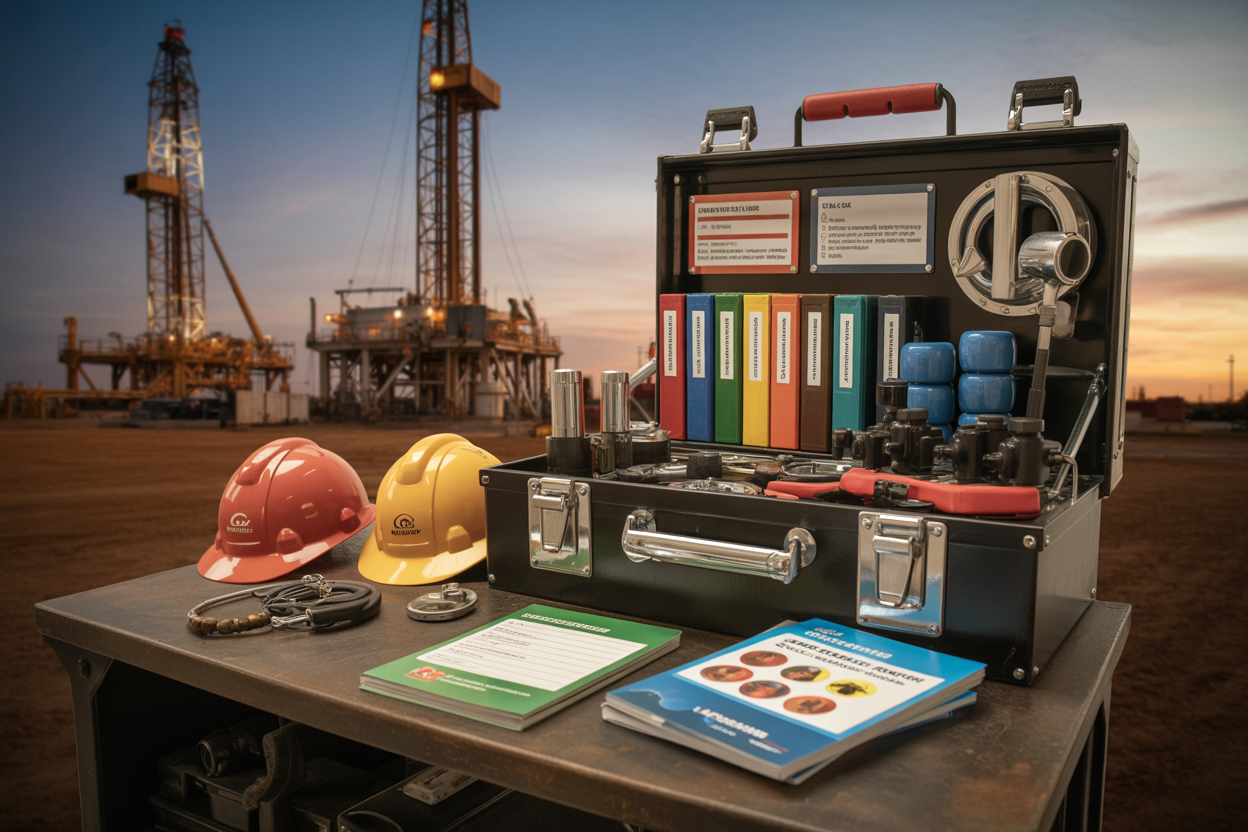
With your oilfield safety program’s free resources in place, premium platforms take your training to the next level. Solutions like Vector Solutions provide comprehensive libraries covering:
- Process operations and equipment maintenance
- Health, safety, and environmental (HSE) compliance aligned with OSHA standards
- Industrial skills and continuous improvement training
Organizations using these platforms report customers being 30% safer, with incident rates well below OSHA averages—a compelling case for investing in premium oilfield safety resources.
PowerPoint Presentations and Quizzes for Team Training
Premium resources elevate oilfield safety meeting topics through dynamic 3D animations and structured assessments that improve comprehension of high-risk tasks. Key features include:
- Knowledge checks after each module to reinforce learning
- Engaging visuals that clarify complex process operations
- Trackable completions through an integrated Learning Management System (LMS), helping leaders prove compliance and monitor readiness across shifts
Spanish Language Safety Talks for Diverse Work Crews
Now that we’ve covered training formats, it’s worth noting that inclusive safety programs address language barriers directly. Premium platforms support diverse crews by delivering oil and gas safety toolbox talks in Spanish, ensuring every worker—regardless of language—receives consistent, clear safety instruction and can perform confidently on the job.

Safety in the oilfield is not something that can be treated as a one-time effort. From understanding the hierarchy of safeguards to holding regular toolbox talks, every step your team takes toward consistent safety communication helps reduce the risk of injuries, illnesses, and fatalities. The oil and gas industry is constantly evolving, and your safety training efforts need to keep pace with it.
Whether you start with free resources or invest in a premium membership for access to over 350 exclusive safety talks, ad-free PDFs, PowerPoint presentations, and Spanish-language versions, the tools are available to build a stronger, more reliable safety program. The key is to stay consistent, keep your crew informed, and never let complacency take hold on the worksite. Take advantage of the resources available to you today and make safety a daily priority on every job site.
- Download the guide