


Emergency Response on a Drilling Rig: What Every Crew Member Needs to Know

Good rig crew safety training saves lives. Let’s get into it.
Understanding the Unique Risks of a Drilling Rig Environment
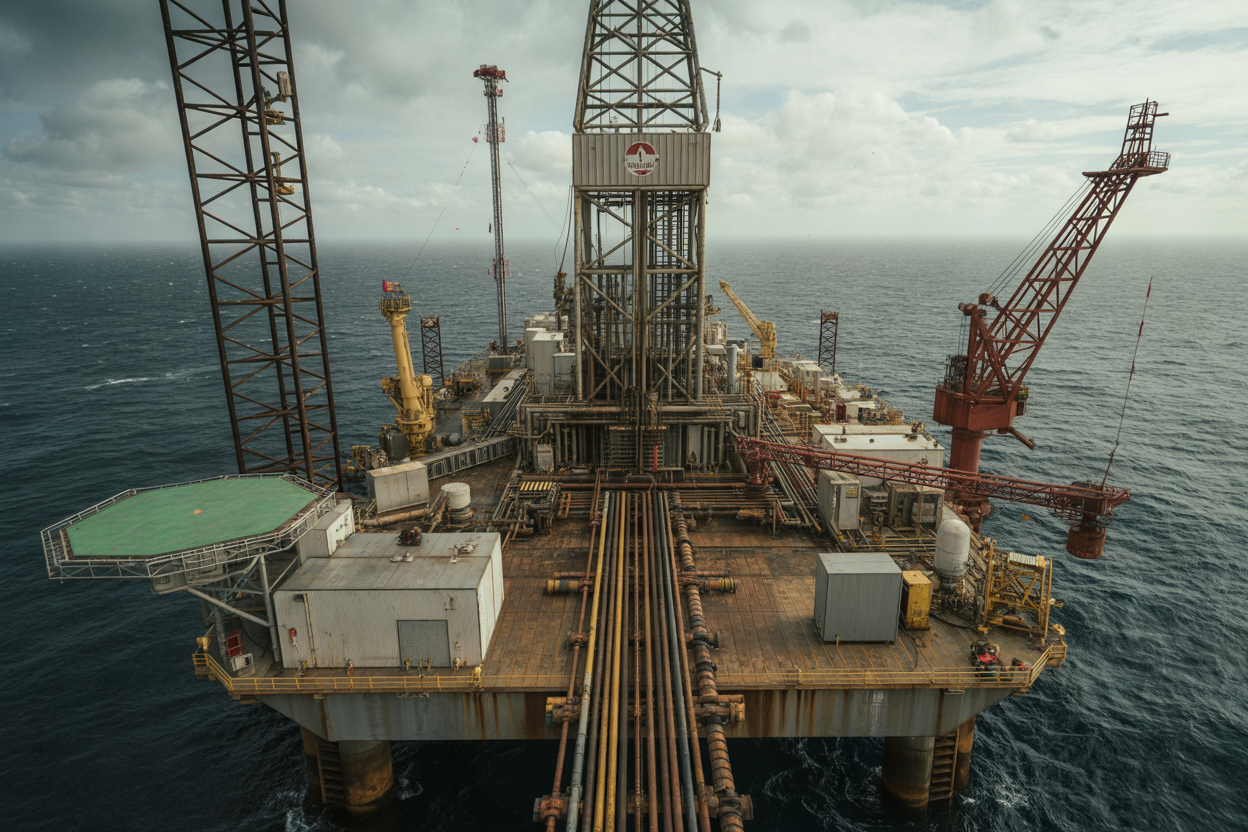
Common Hazards That Make Rigs High-Risk Workplaces
Drilling rigs concentrate multiple serious hazards into one confined space:
- Flammable hydrocarbons — gas kicks and blowouts can ignite instantly
- High-pressure equipment — burst lines and dropped objects cause severe injuries
- Rotating machinery — drawworks, rotary tables, and top drives create entanglement risks
- H₂S exposure — hydrogen sulfide can incapacitate a worker in seconds
- Fire and explosions — fuel storage, mud systems, and wellbore gases all feed potential ignition
Drilling rig risk management starts with understanding that these hazards rarely appear alone — they compound each other fast.
How Remote Locations Complicate Emergency Response
Offshore platforms and remote land rigs share a brutal reality: help is far away. Helicopter medical evacuations can take 30–90 minutes. Rough weather can ground aircraft entirely. Supply vessels face the same delays. This means the rig crew is the first, second, and sometimes only line of defense in the critical early minutes of any emergency.
Why Standard Emergency Protocols Are Not Enough on a Rig
Generic workplace emergency plans don’t account for blowout emergency response, simultaneous multi-hazard events, or mass casualty scenarios at sea. Oilfield emergency procedures must be purpose-built — covering rig-specific equipment, escape routes, muster points, and communication chains that match the actual layout and risks of each installation.
Building a Robust Emergency Response Plan
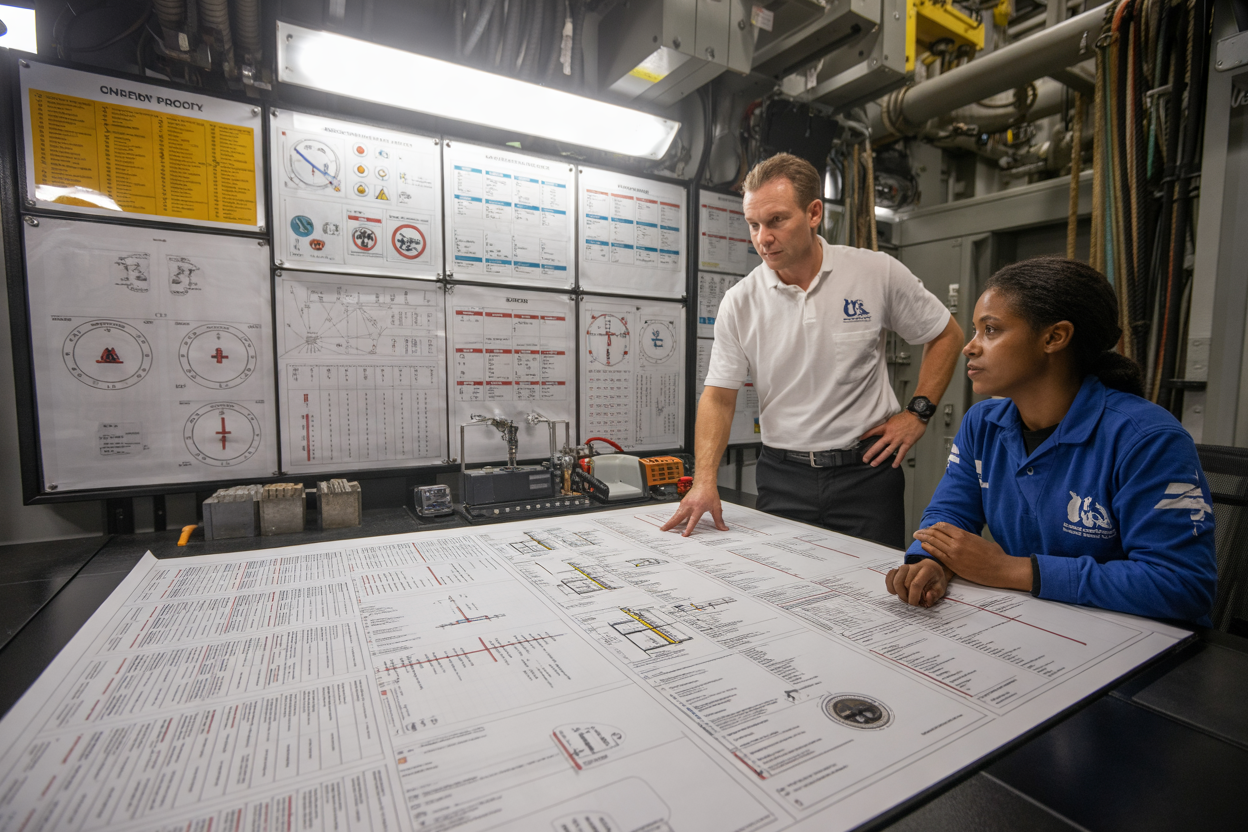
Key Components Every Rig Emergency Plan Must Include
A solid rig emergency response plan covers these non-negotiables:
- Hazard identification – blowouts, fires, H₂S releases, structural failures
- Emergency shutdown (ESD) procedures with step-by-step protocols
- Muster station assignments and headcount verification methods
- Medical response capabilities and nearest trauma facility contacts
- Regulatory compliance with BSEE, OSHA, or applicable offshore authority standards
Assigning Clear Roles and Responsibilities
Every crew member needs a defined role before an emergency hits. The Offshore Installation Manager (OIM) holds command authority. Tool pushers, medics, and fire team leads each own specific response actions. Ambiguity costs lives.
Establishing Communication Chains That Work Under Pressure
Noise, chaos, and equipment failure will test any communication system. Effective oilfield emergency procedures rely on:
- Primary and backup radio channels
- Pre-designated shore-based emergency coordinators
- Short, clear radio protocols (no jargon, no improvisation)
Accounting for Environmental and Weather-Related Variables
Weather changes everything on a rig. A strong drilling rig risk management plan should adjust evacuation routes and lifeboat deployment based on:
| Variable | Impact |
|---|---|
| Wind direction | Affects gas dispersion and muster location |
| Sea state | Limits lifeboat launch options |
| Visibility | Alters helicopter evacuation feasibility |
Responding to the Most Critical Rig Emergencies
Emergency Response on a Drilling Rig: What Every Crew Member Needs to Know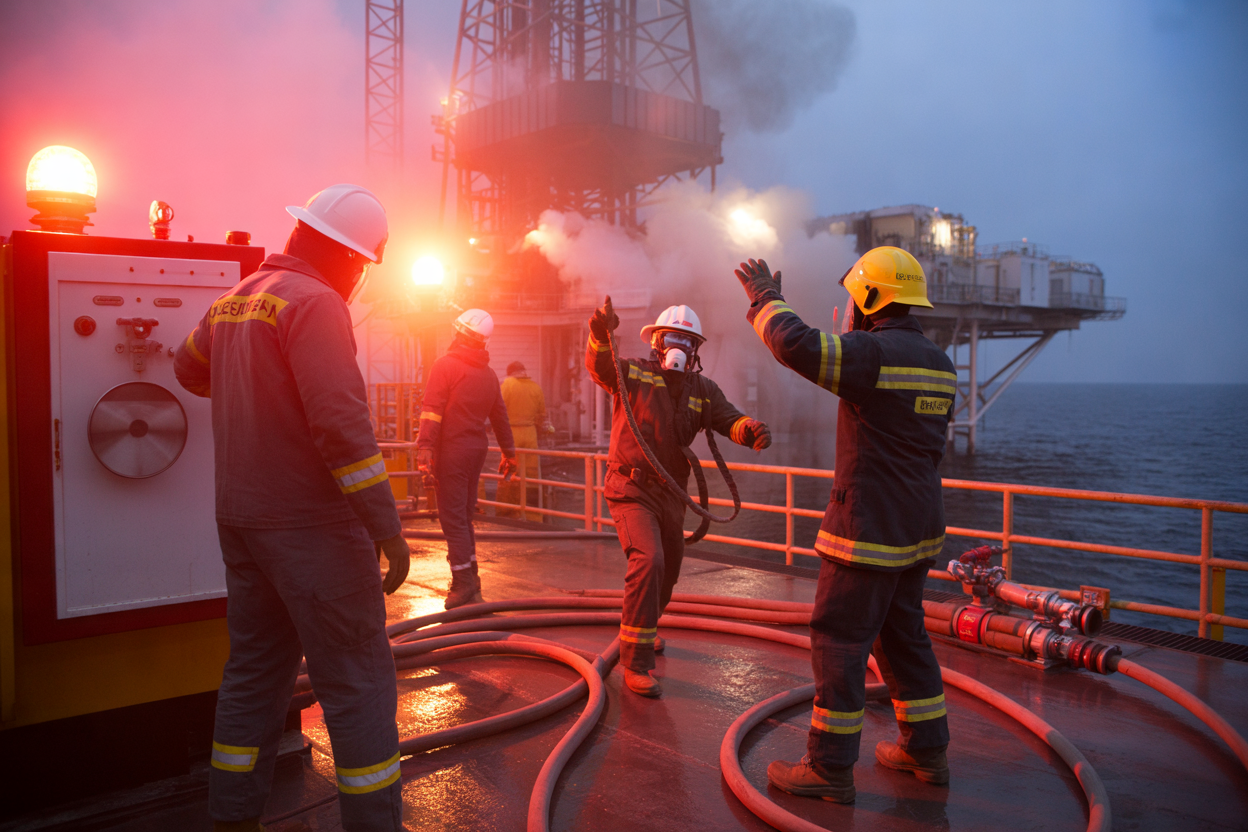
Blowouts and Well Control Incidents
When a blowout hits, every second matters. Crews must activate the blowout preventer (BOP) immediately, alert the toolpusher and company man, and follow the well control emergency plan without hesitation. Blowout emergency response depends heavily on prior drills — there’s no room to figure it out on the fly.
Fire and Explosion Response Procedures
- Activate the general alarm immediately
- Isolate ignition sources and shut down non-essential equipment
- Fight small fires only if trained and safe to do so
- Muster at designated assembly points if the fire escalates
Man Overboard and Evacuation Scenarios
Offshore rig evacuation plans include lifeboat drills, life ring deployment, and fast rescue craft procedures. When someone goes overboard, the priority is marking the location, alerting the bridge, and deploying recovery teams fast.
Hydrogen Sulfide Gas Release Protocols
H2S is silent and deadly. Crews must:
- Don SCBA equipment before entering affected zones
- Move upwind immediately
- Monitor with personal H2S detectors at all times
Injury and Medical Emergency Response On Site
Every drilling rig needs trained medics and a clear oilfield emergency procedure for trauma, burns, or cardiac events. Stabilize the patient, contact offshore medical support, and prepare for medevac if conditions require it.
Mastering Muster and Evacuation Procedures
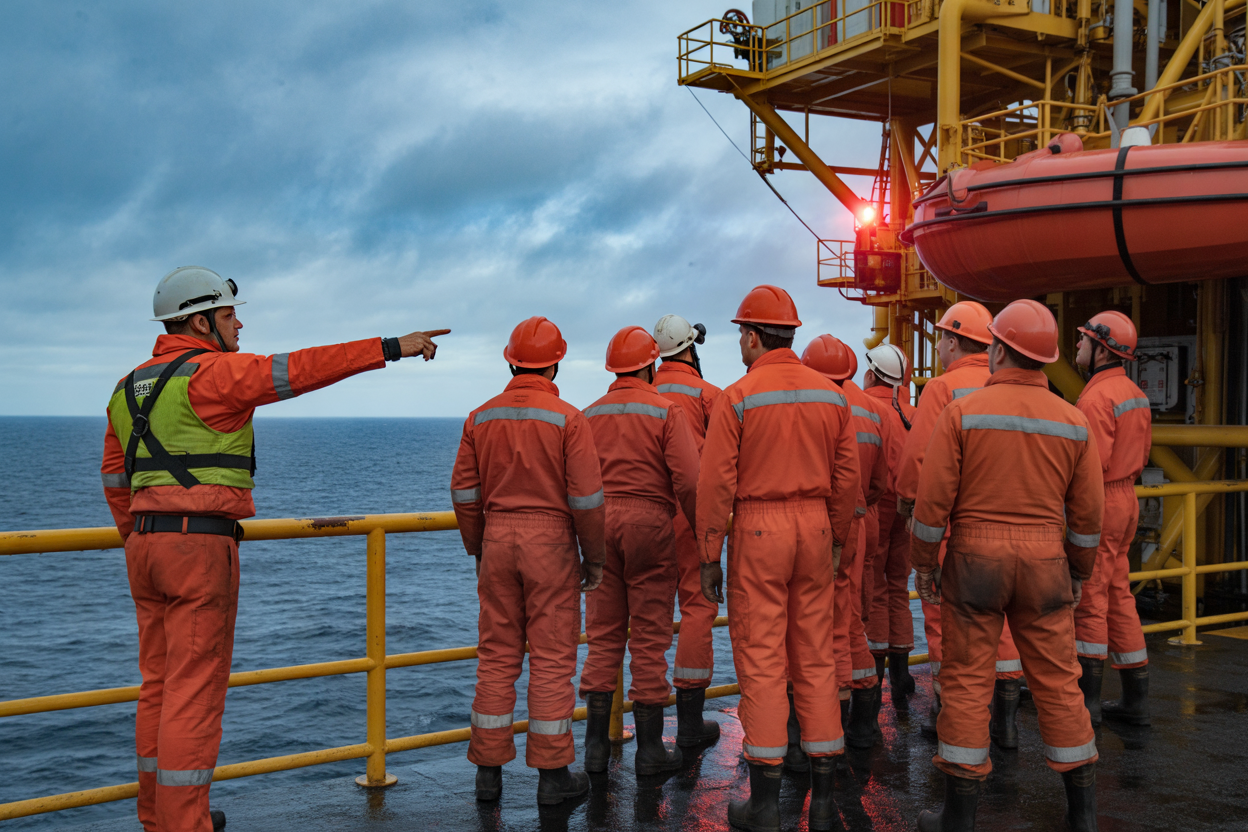
How to Conduct an Effective Muster Drill
A good muster drill isn’t a checkbox exercise — it’s a rehearsal that could save lives. Every drill should:
- Be unannounced at least occasionally to test real reaction times
- Account for crew members who may be sleeping, working below deck, or in noisy environments
- Include a headcount verified against the active crew manifest
- Debrief afterward to identify gaps and fix them before the next drill
Drilling rig muster procedures should be practiced monthly at minimum, with full evacuation drills conducted regularly per regulatory requirements.
Lifeboats, Life Rafts, and Escape Routes Explained
| Equipment | Best Used For |
|---|---|
| Totally enclosed lifeboats | Primary offshore evacuation; weather-resilient |
| Inflatable life rafts | Backup when lifeboats are inaccessible |
| Escape chutes/slides | Fast deck-to-water descent on fixed platforms |
| Personal flotation devices | Every crew member, every scenario |
Escape routes must be posted clearly, kept unobstructed, and lit with emergency lighting that activates automatically.
Ensuring Every Crew Member Knows Their Evacuation Role
Assign specific roles before emergencies happen:
- Muster coordinators — account for personnel at each station
- Lifeboat operators — trained and certified, not just “whoever is nearby”
- Sweep teams — check cabins and workspaces for stragglers
New crew members get a safety briefing on day one — no exceptions.
Leveraging Technology to Strengthen Emergency Response
Gas Detection and Alarm Systems That Save Lives
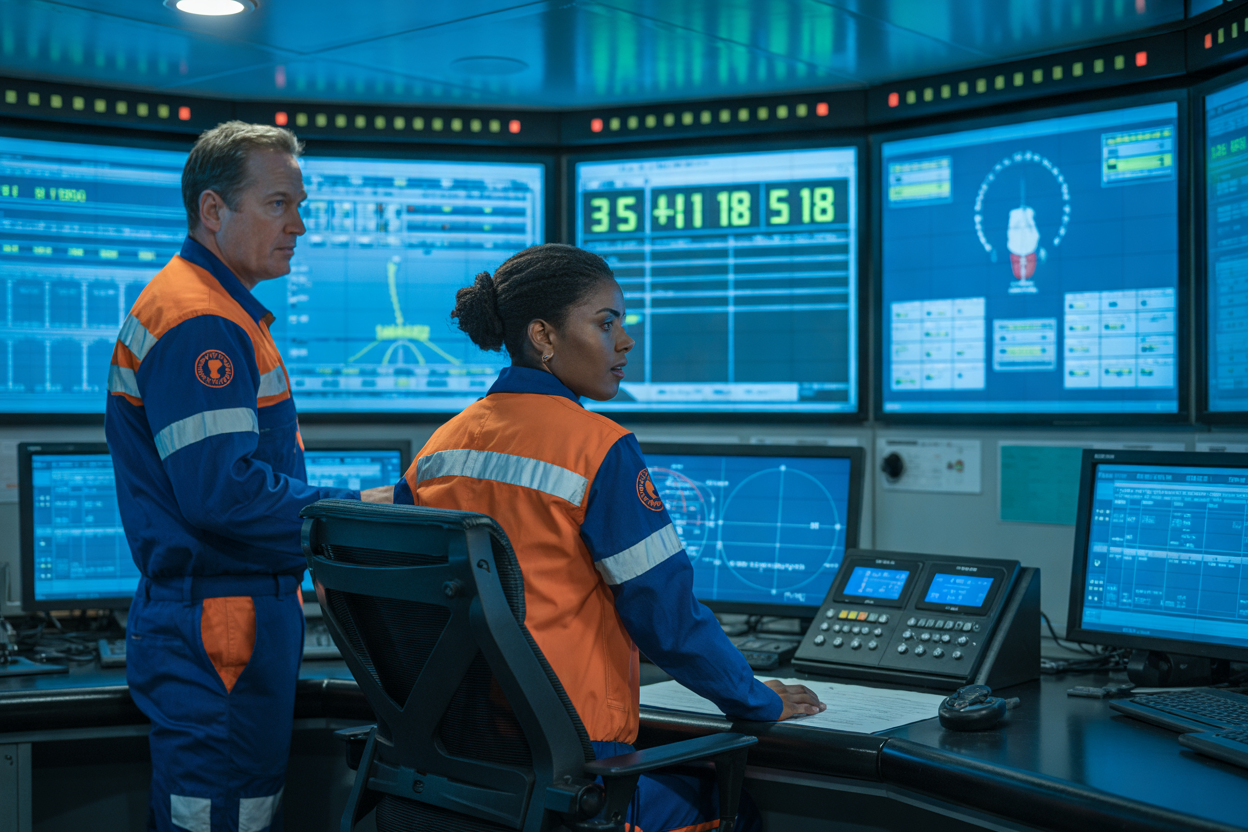
Modern drilling rigs run on layers of gas detection technology working around the clock. Fixed-point detectors, infrared sensors, and ultrasonic leak detectors continuously monitor the air for combustible and toxic gases like H₂S and methane. The moment concentrations hit a threshold, alarms trigger automatically — giving crews precious seconds to react before a situation escalates.
Key components include:
- Fixed gas detectors at wellheads, shale shakers, and enclosed spaces
- Portable personal H₂S monitors worn by every crew member
- Audible and visual alarms staged by severity (caution, warning, danger)
Emergency Shutdown Systems and How They Work
Emergency Shutdown Systems (ESD) are the rig’s last line of mechanical defense. When activated — either automatically or manually — they isolate hydrocarbon flow, shut down ignition sources, and depressurize process equipment in seconds. A well-designed ESD is central to any solid drilling rig emergency response plan.
Communication Tools That Keep Crews Connected During a Crisis
Clear communication can be the difference between a controlled emergency and a disaster. Reliable tools include:
| Tool | Purpose |
|---|---|
| PA/General Alarm System | Instant rig-wide alerts |
| UHF/VHF Radios | Team-to-team coordination |
| Satellite phones | Offshore-to-shore contact |
| Mustering software | Real-time headcount tracking |
Redundancy is everything — if one system fails, another must be ready.
Training Crews to Stay Calm and Act Fast
Why Regular Drills Dramatically Improve Survival Outcomes
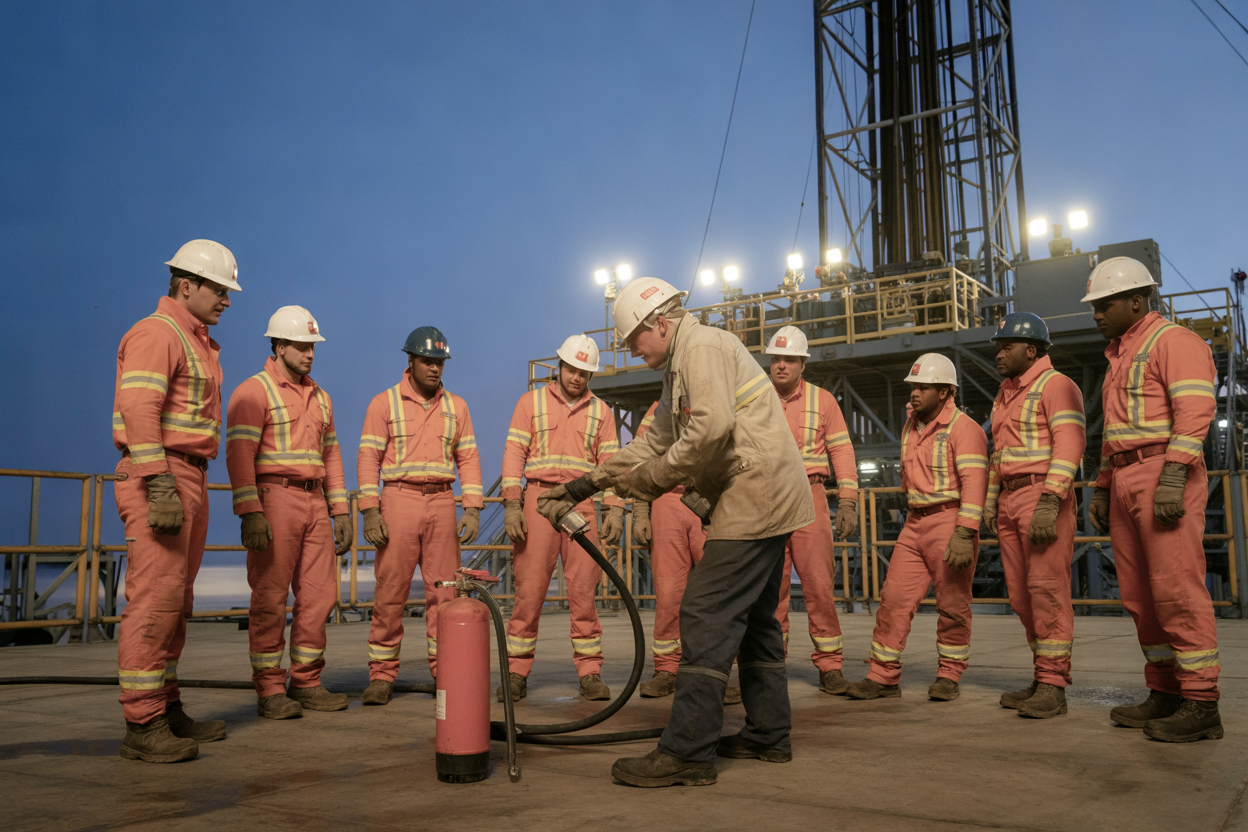
Muscle memory saves lives. When a blowout hits or fire breaks out, there’s no time to think — your crew needs to react. Rigs that run frequent, unannounced drills consistently see faster muster times and fewer injuries during actual emergencies. Drilling rig emergency response becomes instinctive, not improvised.
Scenario-Based Training for Realistic Preparedness
Generic safety videos don’t cut it. Effective rig crew safety training drops crews into realistic situations:
- Simulated blowout emergency response with live pressure scenarios
- Nighttime evacuation drills with reduced visibility
- Man-overboard and lifeboat deployment exercises
- Fire suppression under time pressure
The closer training mirrors real conditions, the better crews perform when stakes are highest.
Mental Resilience and Decision-Making Under Extreme Pressure
Physical skills mean nothing if panic takes over. Strong oilfield emergency procedures training includes stress inoculation — deliberately creating discomfort during drills so crew members learn to think clearly when adrenaline spikes. Short breathing techniques and clear communication protocols help teams stay coordinated under chaos.
Tracking Training Compliance and Identifying Skill Gaps
| Tracking Method | Benefit |
|---|---|
| Digital competency logs | Real-time compliance visibility |
| Post-drill debriefs | Pinpoints individual weak spots |
| Refresher scheduling | Prevents skill decay over time |
Consistent tracking keeps your drilling rig risk management program sharp and audit-ready.