



H₂S Safety on Drilling Rigs
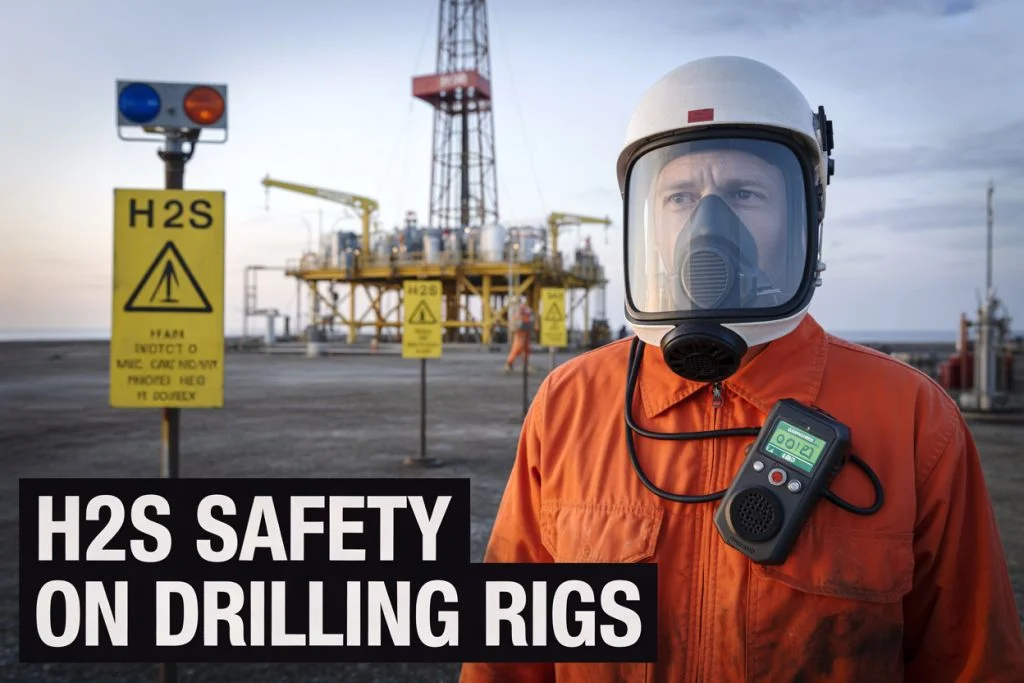
What Every Rig Worker Needs to Know
If you work on a drilling rig, H₂S safety is not something you can afford to wing. Hydrogen sulfide is one of the most dangerous gases in oil and gas operations — colorless, fast-moving, and deadly at concentrations you can’t even smell. This guide is written for rig workers, safety officers, toolpushers, and anyone else who spends time on or around active drilling operations where hydrogen sulfide exposure is a real risk.
Here’s what we’re going to walk through:
- How to spot the warning signs of H₂S and what your drilling rig gas detection systems are actually telling you
- The right personal protective equipment for H₂S environments and how to use it correctly when it counts
- Emergency response procedures that crews can act on fast — before seconds become a tragedy
Whether you’re brushing up before a job or building out an H₂S safety training program for your team, this breakdown keeps things practical and straight to the point. No fluff, just what you need to stay safe out there.
Understanding the Dangers of H₂S on Drilling Rigs

What Makes H₂S Uniquely Hazardous in Oilfield Environments
H₂S is colorless, heavier than air, and smells like rotten eggs — but only at low concentrations. At dangerous levels, it kills your sense of smell almost instantly, which is exactly what makes it so deadly on drilling rigs.
How H₂S Affects the Human Body at Different Concentration Levels
| Concentration (ppm) | Effect |
|---|---|
| 0.01–1.5 | Detectable rotten egg odor |
| 10 | OSHA ceiling limit |
| 50–100 | Eye/respiratory irritation, headache |
| 200–300 | Rapid olfactory paralysis |
| 500–700 | Seizures, unconsciousness within minutes |
| 1,000+ | Immediate collapse, death |
Common Sources of H₂S Release During Drilling Operations
- Kick events — formation gas entering the wellbore unexpectedly
- Mud returns — H₂S-laden gas escaping at the shale shaker
- Annular releases — gas migrating up the drill string
- Tank degassing — contaminated drilling fluids off-gassing in pits
Why Drilling Rigs Face Elevated Exposure Risks Compared to Other Worksites
Drilling rigs combine confined spaces, high-pressure wellbores, and rotating crews working 12-hour shifts — often in remote locations. H₂S safety on drilling rigs is particularly challenging because concentrations can spike with zero warning, weather conditions affect gas dispersion unpredictably, and evacuation routes are limited on an offshore platform or tight land location.
Recognizing H₂S Warning Signs and Alarm Systems
How to Identify Physical Symptoms of H₂S Exposure Early
Your body often detects hydrogen sulfide before your instruments do. Know these warning signs:
- Mild exposure (1–50 ppm): Eye irritation, headache, runny nose, sore throat
- Moderate exposure (50–200 ppm): Severe eye pain, nausea, dizziness, coughing
- High exposure (200–500 ppm): Loss of smell (olfactory fatigue), disorientation, fluid in lungs
- Immediately dangerous (500+ ppm): Rapid unconsciousness, seizures, cardiac arrest
Never rely on smell alone—olfactory fatigue can make you think the danger has passed when it hasn’t.
Understanding Fixed Gas Detection Systems on Rigs
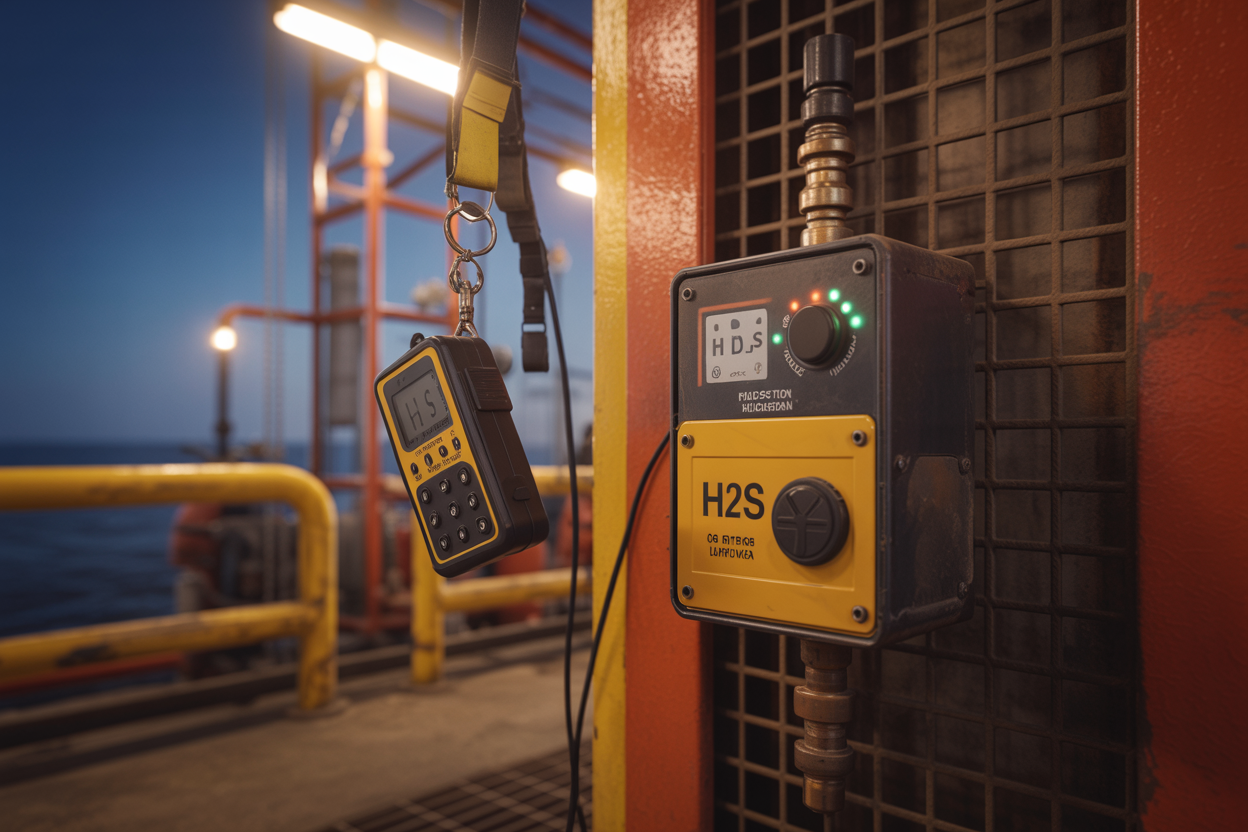
Drilling rig gas detection systems typically use electrochemical or catalytic bead sensors placed at:
- Shale shakers and bell nipple areas
- Mud pits and degassers
- Living quarters intake vents
Alarms trigger at 10 ppm (warning) and 20 ppm (evacuation threshold) per most oilfield standards.
How Portable H₂S Monitors Work and When to Use Them
Portable monitors use electrochemical sensors that react with H₂S, generating a current proportional to gas concentration. Use them when:
- Entering confined spaces or low-lying areas
- Working downwind during well control events
- Fixed detectors are offline for maintenance
Calibrate portable units daily and bump-test before every shift.
Essential Personal Protective Equipment for H₂S Environments
Choosing the Right Respiratory Protection for Your Risk Level
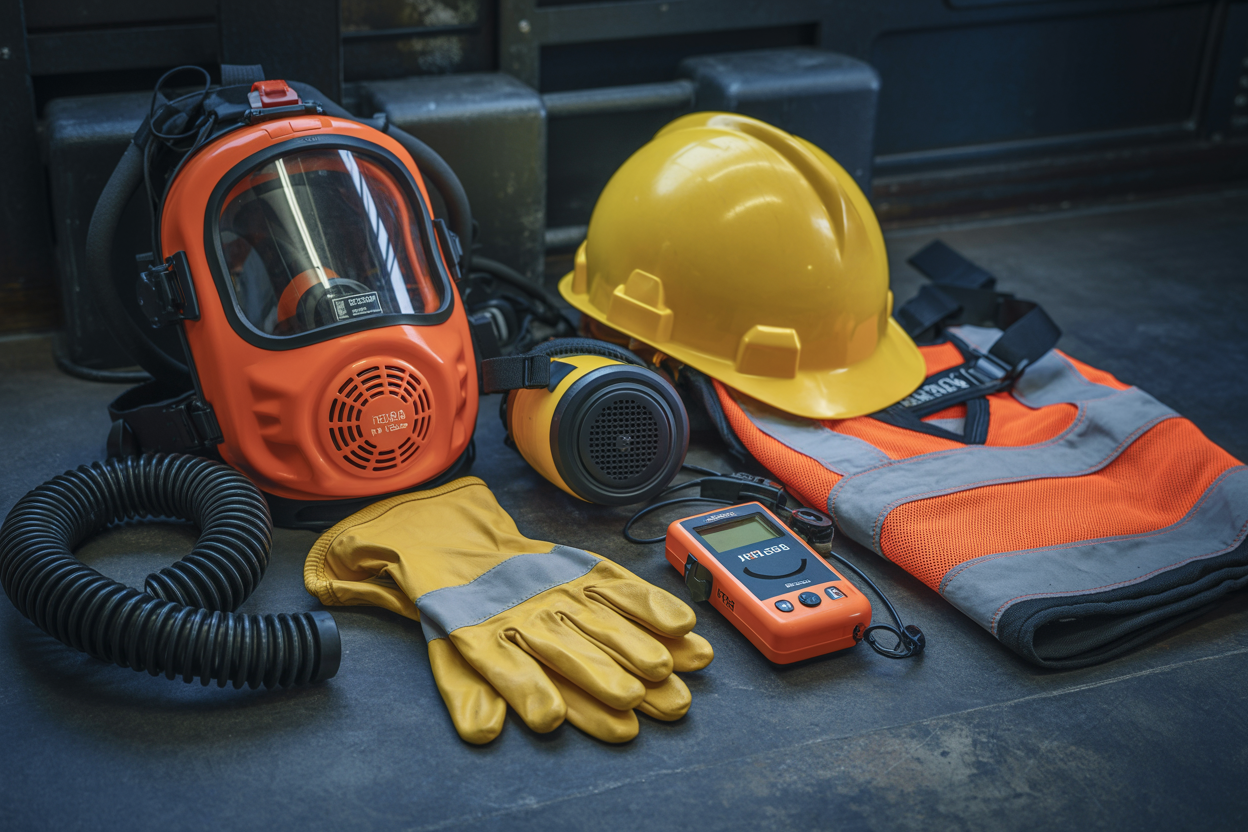
Matching your respirator to actual H₂S concentrations matters more than most people realize. Here’s a quick breakdown:
| H₂S Concentration | Recommended Protection |
|---|---|
| <10 ppm | Half-face APF respirator |
| 10–50 ppm | Full-face air-purifying respirator |
| >50 ppm (IDLH) | SCBA or supplied-air respirator |
Always check cartridge ratings — standard organic vapor cartridges won’t cut it for H₂S safety on drilling rigs.
How to Properly Fit and Maintain Self-Contained Breathing Apparatus
A poorly fitted SCBA is nearly as dangerous as no SCBA at all. Before every use:
- Perform a positive and negative pressure seal check
- Confirm cylinder pressure reads above 90% capacity
- Test regulator response and low-pressure alarm
- Check facepiece straps for cracks or brittleness
Additional PPE That Reduces Overall H₂S Exposure Risk
Respiratory protection handles the biggest threat, but these extras still count:
- Chemical-resistant gloves — liquid H₂S contact causes skin burns
- Safety goggles — eye irritation hits fast at elevated concentrations
- Two-way radio — staying connected during H₂S emergencies saves lives
Inspection and Maintenance Schedules That Keep Equipment Reliable
- Pre-shift: Visual inspection, pressure checks, seal integrity
- Monthly: Full functional test, replace worn components
- Annually: Certified technician overhaul with documented records
Never skip documentation — it’s your compliance proof and your safety net.
Proven Emergency Response Procedures That Save Lives
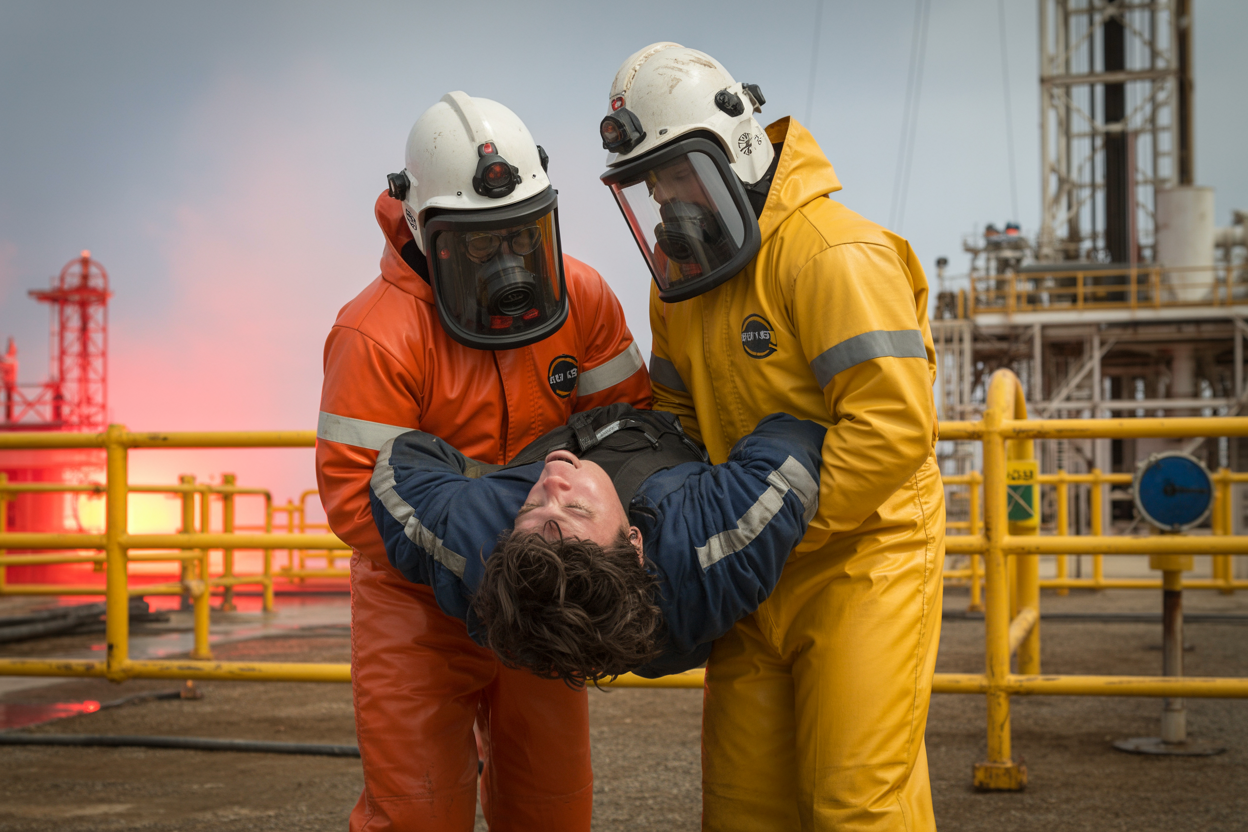
How to Execute a Safe and Efficient Rig Evacuation
When H₂S alarms trigger, every second counts. Move upwind immediately, follow marked muster routes, and never use elevators. Designated assembly points should be drilled into every crew member’s memory before an actual emergency hits.
Steps for Rescuing an H₂S Victim Without Becoming One
- Never enter a contaminated zone without SCBA — most H₂S fatalities are rescuers
- Confirm your breathing apparatus is functioning before approaching
- Drag victims to fresh air using rope or retrieval lines from a safe distance when possible
Administering First Aid to H₂S-Exposed Workers on Site
| Condition | Immediate Action |
|---|---|
| Unconscious, breathing | Recovery position, oxygen therapy |
| Not breathing | CPR immediately, call for AED |
| Eye irritation | Flush with water for 15+ minutes |
| Mild dizziness | Move to fresh air, monitor closely |
Coordinating with Emergency Services for Severe Exposure Cases
Contact emergency services early — don’t wait to see if symptoms worsen. Give responders gas concentration readings, victim count, and last known location. Your H₂S emergency response procedures should include pre-saved contacts for local medical facilities.
Post-Incident Reporting Procedures That Prevent Future Accidents
Document exposure levels, timeline, and equipment performance. Root-cause analysis stops the same incident from repeating. File regulatory reports within required timeframes and share findings across crews.
Building a Robust H₂S Safety Training Program

Core Competencies Every Rig Worker Must Master
Every person on a drilling rig needs to genuinely understand H₂S — not just enough to pass a quiz, but enough to act correctly under pressure. Key skills include:
- Identifying hydrogen sulfide warning signs (rotten egg odor, eye irritation, sudden headache)
- Reading and responding to H₂S alarm systems on drilling operations
- Donning SCBA equipment correctly within seconds
- Executing evacuation and rescue without becoming a second victim
Designing Realistic Drills That Prepare Crews for Real Emergencies
Tabletop exercises don’t cut it alone. Effective H₂S emergency response training means running full scenario drills — simulated gas kicks, alarm activations, man-down rescues — with realistic time pressure. Mix up scenarios so crews aren’t just memorizing scripts. Rotate roles so every worker practices decision-making, not just following orders.
Keeping Training Records Current to Meet Regulatory Standards
A solid H₂S safety training program lives or dies by its documentation. Records should track:
| Record Type | Minimum Requirement |
|---|---|
| Initial H₂S certification | Before site entry |
| Refresher training | Annually |
| Drill participation logs | Per exercise |
| Equipment competency checks | Quarterly |
Regulatory compliance in the oilfield means auditors can pull any worker’s file and confirm current, verified training — no gaps, no exceptions.
Regulatory Standards and Compliance Requirements

Key OSHA and Industry Regulations Governing H₂S on Drilling Sites
H₂S regulatory compliance in oilfield operations draws from multiple frameworks:
| Regulation | Key Requirement |
|---|---|
| OSHA 29 CFR 1910.1000 | PEL of 20 ppm ceiling limit |
| OSHA 29 CFR 1926.55 | Construction/drilling site air contaminants |
| API RP 49 | Drilling in H₂S environments best practices |
| NFPA 72 | H₂S alarm system standards |
Most states with active drilling also layer their own regulations on top of federal standards, so always check local requirements.
How Proper Documentation Protects Workers and Operators
Strong documentation creates a paper trail that protects everyone involved:
- Written H₂S safety plans specific to each drilling site
- Training records showing every worker completed H₂S safety training
- Equipment inspection logs for gas detection systems and PPE
- Incident and near-miss reports filed promptly and thoroughly
- Calibration records for all H₂S monitors and alarms
Good records also speed up investigations and help teams learn from close calls.
Consequences of Non-Compliance and How to Avoid Them
Skipping H₂S regulatory compliance carries serious costs:
- OSHA fines reaching $156,259 per willful violation
- Drilling operations shutdowns
- Criminal liability after fatalities
- Reputational damage that affects future contracts
Avoid these outcomes through regular third-party audits, updated safety programs, and keeping documentation current.
Conclusion

H₂S is one of the most serious hazards on any drilling rig, and there’s no room for shortcuts when it comes to keeping people safe. From knowing how to spot the warning signs early to suiting up with the right protective gear, every layer of protection matters. A solid emergency response plan, backed by proper training, can mean the difference between a close call and a tragedy. Staying on top of regulatory requirements keeps your operation compliant and, more importantly, keeps your crew alive.
Take a hard look at your current H₂S safety program and ask yourself honestly — are the gaps covered? Make sure your team gets regular, hands-on training, your alarm systems are tested and working, and everyone on the rig knows exactly what to do when things go wrong. Safety culture starts at the top, so lead by example and make H₂S preparedness a non-negotiable part of daily operations.